Support our educational content for free when you purchase through links on our site. Learn more
🏕️ 25 Camping Essentials for Beginners: Your 2026 Survival Guide

Ever arrived at a campsite only to realize you packed a tent but forgot the stakes, or brought a sleeping bag rated for a tropical beach while the forecast called for a frosty 30°F night? We have, and let’s just say “rustic adventure” quickly turns into a shivering, sleepless nightmare. But here is the good news: you don’t need to be a survival expert to enjoy the great outdoors. In fact, the difference between a miserable night and a magical one often comes down to just a few critical gear choices.
This isn’t just another generic list; it’s the definitive 2026 checklist we’ve refined after hundreds of trips, from backyard setups to remote wilderness escapes. We’ll reveal the one item 90% of beginners forget (hint: it’s not your phone), break down the myth of “cotton kills,” and show you exactly how to build a kit that balances comfort with cost. Whether you are car camping in style or dipping your toes into backpacking, these 25 non-negotiable essentials will ensure your first trip is memorable for the right reasons. Ready to stop guessing and start camping? Let’s dive in.
Key Takeaways
- The “Big Three” Rule: Your tent, sleeping bag, and sleeping pad are the absolute foundation; never compromise on insulation or weather protection here.
- Layer Up, Don’t Pack Cotton: Synthetic and wool layers are essential for temperature regulation, while cotton can lead to dangerous hypothermia in cold, wet conditions.
- Practice Before You Go: Set up your tent in your living room first to avoid a 2-hour struggle in the rain on your actual trip.
- Water is Heavy: Always carry a water filter or purification method if you are near a source, as water weighs over 8 lbs per gallon.
- Safety First: A comprehensive first aid kit, a physical map, and a headlamp are non-negotiable, regardless of how close you are to civilization.
Table of Contents
- ⚡️ Quick Tips and Facts
- 🏕️ From Backyard to Wilderness: A Brief History of Camping Essentials
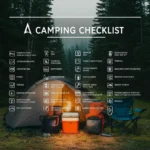
- 🎒 The Ultimate 25-Item Beginner’s Camping Gear Checklist
- 🚫 Common Beginner Mistakes to Avoid on Your First Trip
- 🧠 The Psychology of Packing: Why You Overpack (and How to Stop)
- 📅 Seasonal Adjustments: Adapting Your Gear for Summer, Fall, Winter, and Spring
- 🏆 Top Brand Recommendations: What We Actually Trust in the Field
- 🎉 Enjoy a Greater Slice of the Great Outdoors: Your First Night Awaits
- 🏁 Conclusion
- 🔗 Recommended Links
- ❓ FAQ: Your Burning Questions About Camping Essentials Answered
- 📚 Reference Links
⚡️ Quick Tips and Facts
Before you even start packing your car or lacing up your hiking boots, let’s hit the pause button. We’ve seen too many enthusiastic beginners arrive at a campsite only to realize they forgot the one thing that turns a “rustic adventure” into a “sleepless nightmare.” Here is the golden rule of camping essentials: Comfort is not essential, but it can certainly make or break a camping trip. As the experts at Camping Checklist™ often say, you can survive on a rock, but you’ll remember the trip fondly if you sleep on a pad.
- The “Cotton Kills” Myth (and Reality): You’ve heard it before. Cotton absorbs moisture, loses insulation, and can lead to hypothermia in cold weather. While you won’t die instantly from a cotton t-shirt on a sunny July afternoon, synthetic or wool layers are your best friends for temperature regulation.
- Water Weight: Water weighs 8.34 pounds per gallon. If you are car camping, bring a 5-gallon jug. If you are backpacking, every ounce counts, so a water filter is non-negotiable.
- The 10-Minute Rule: If you can’t set up your tent in 10 minutes at home, you won’t be able to do it in the dark, in the rain, with a 5-year-old screaming in the background. Practice your setup in your living room first!
- Leave No Trace (LNT): This isn’t just a slogan; it’s a law in many places. Always pack out what you pack in. For more on this, check out the Leave No Trace Center for Outdoor Ethics.
Did you know? The concept of “camping” as a leisure activity only really took off in the late 19th century. Before that, it was mostly for survival or military maneuvers. We’ve come a long way from sleeping on hard ground without a pillow! If you’re wondering what the absolute non-negotiables are before you even think about that fancy camp chair, we’ve got you covered. In our deep dive into the 5 Most Important Things to Bring Camping in 2026 🏕️, we break down the hierarchy of needs that will save your sanity.
🏕️ From Backyard to Wilderness: A Brief History of Camping Essentials

You might think camping is just “glamping” without the glitz, but the evolution of our gear tells a fascinating story of human ingenuity. In the 1800s, the “essential” was a heavy wool blanket and a canvas tent that weighed as much as a small car. The Coleman brand, founded in 1900, revolutionized the industry by making the portable lantern and stove accessible to the masses. Suddenly, you didn’t need to be a survivalist to enjoy the outdoors; you just needed a can of fuel and a match. Fast forward to the 1970s, and the backpacking revolution hit. Suddenly, “lighter is better” became the mantra. Brands like REI and Patagonia began experimenting with synthetic insulation and lightweight nylon. Today, we are in the era of ultralight tech and solar integration. We have tents that weigh less than a bag of flour and stoves that boil water in 90 seconds. But the core philosophy remains unchanged: Shelter, Fire, Water, and Food.
Why does this matter to you? Understanding the history helps you realize that you don’t need the most expensive gear to start. A 20-year-old tent from your garage is often just as good as a $500 ultralight one for a weekend car camping trip. As the old saying goes, “The best gear is the gear you already own.”
🎒 The Ultimate 25-Item Beginner’s Camping Gear Checklist
Ready to build your kit? We’ve compiled the ultimate list of 25 items that cover every base from “I’m freezing” to “I’m hungry” to “I need to go to the bathroom.” Note: While we list 25 items, remember that car camping allows for bulkier items, while backpacking requires a ruthless reduction of this list.
1. 🛌 Shelter Systems: Tents, Tarps, and Sleeping Arrangements
Your tent is your castle. Don’t cheap out here, but don’t overspend either. Rating Table: Top Beginner Tents
| Feature | Coleman Sundome 4-Person | REI Co-op Half Dome SL 2+ | Big Agnes Copper Spur HV UL2 |
|---|---|---|---|
| Ease of Setup | 9/10 (Color-coded poles) | 8/10 (Freestanding) | 7/10 (Requires practice) |
| Weather Resistance | 7/10 (Good for rain, not storms) | 8/10 (Solid storm protection) | 9/10 (High-end storm proof) |
| Weight | 10 lbs (Heavy) | 4 lbs 2 oz (Light) | 2 lbs 10 oz (Ultralight) |
| Price Range | Budget | Mid-Range | Premium |
| Best For | Car Camping | Backpacking/Car Camping | Serious Backpacking |
- The “Practice Run” Strategy: As noted by Koa.com, “Stick with a tent that’s easy to set up; save the bells and whistles for another year.” We cannot stress this enough: Set it up in your living room. You’ll find missing stakes or torn poles before you’re 20 miles from civilization.
- Tarp Add-on: A simple poly tarp can double your living space or act as a rainfly if your tent fails. 👉 Shop Tents on:
- Coleman Sundome: Amazon | Coleman Official
- REI Co-op Half Dome: REI | Amazon
2. 🌡️ Climate Control: Sleeping Bags, Pads, and Insulation
Here is the secret most beginners miss: You get cold from the ground up. A sleeping bag is useless if you’re lying on a slab of ice.
- Sleeping Bags: Look for a temperature rating 10 degrees lower than the forecast. If it’s supposed to be 40°F, bring a 30°F bag.
- Down vs. Synthetic: Down is lighter and warmer but fails when wet. Synthetic is heavier but works when damp. For beginners, synthetic is often the safer bet unless you are in a dry climate.
- Recommendation: The Kelty Cosmic 20 is a classic for a reason. It’s versatile and reliable.
- Sleeping Pads: This is your insulation layer.
- Inflatable: Comfortable but can puncture.
- Closed-Cell Foam: Indestructible, cheap, but lumpy.
- Self-Inflating: The middle ground. The WELLAX UltraThick is a great entry-level option. 👉 Shop Sleeping Gear on:
- Kelty Cosmic Bag: Amazon | Kelty Official
- WELLAX Sleeping Pad: Amazon
3. 🔥 Fire Starting Mastery: Stoves, Fuel, and Ignition Tools
Fire is life. Without it, you’re just eating cold beans.
- Stoves:
- Car Camping: The Barton Portable 2-Burner allows you to cook full meals like a pro.
- Backpacking: The Jetboil Flash boils water in 100 seconds.
- Ignition: Never rely on just one method. Bring a lighter, matches, and a fire starter (like a magnesium block or cotton balls soaked in petroleum jelly).
- Fuel: Check your stove type! Propane, butane, and white gas are not interchangeable. 👉 Shop Stoves on:
- Barton Stove: Amazon
- Jetboil Flash: Amazon | Jetboil Official
4. 🍳 Camp Kitchen Essentials: Cookware, Utensils, and Food Storage
You don’t need a full kitchen, but you do need to eat.
- Cookware: A cast iron skillet is heavy but amazing for searing. For beginners, a non-stick pot and pan set (like the Coleman 24-Piece Enamel Dinnerware Set) is easier to clean.
- Utensils: Bring a sharp knife, a spatula, and a spork.
- Food Storage: Coolers are essential. The Igloo BMX 25 is a favorite for its ice retention.
- Cleaning: Biodegradable soap (like Dr. Bronner’s) and a collapsible sink. 👉 Shop Kitchen Gear on:
- Coleman Dinnerware: Amazon
- Igloo BMX Cooler: Amazon
5. 💧 Hydration Heroes: Water Filtration, Purification, and Storage
Dehydration is the silent killer.
- Storage: Bring a 7-gallon jug for car camping.
- Filtration: If you are near a stream, a Sawyer Squeeze or LifeStraw is mandatory.
- Purification: Iodine tablets or a SteriPEN for backcountry water. 👉 Shop Water Gear on:
- Sawyer Squeeze: Amazon | Sawyer Official
- LifeStraw: Amazon
6. 🔦 Lighting the Way: Headlamps, Lanterns, and Power Banks
The dark is scary. Bring light.
- Headlamps: Hands-free is king. The SLONIK 1000 Lumen is bright and rechargeable.
- Lanterns: The Blazin’ Sun or a Black Diamond Apollo for ambient light.
- Power: A 20,000mAh power bank to keep your phone charged for emergencies. 👉 Shop Lighting on:
- SLONIK Headlamp: Amazon
- Black Diamond Lantern: Amazon
7. 🧹 Hygiene and Sanitation: Toiletries, Waste Management, and First Aid
- First Aid: A comprehensive kit with bandages, antiseptic, pain relievers, and allergy meds.
- Toilet Paper: Bring your own! And a trowel to dig a 6-inch cat hole if no facilities exist.
- Toiletries: Toothbrush, biodegradable soap, and sunscreen. 👉 Shop Hygiene on:
- Adventure Medical Kits: Amazon
- TETON Sports Pillow: Amazon
8. 👕 Clothing Layers: Weather-Appropriate Attire and Footwear
The Layering System:
- Base Layer: Moisture-wicking (synthetic or wool). NO COTTON.
- Mid Layer: Fleece or puffy jacket for warmth.
- Outer Layer: Waterproof shell for rain/wind.
- Footwear: Hiking boots for trails, sandals for the campsite. Darn Tough socks are the gold standard. 👉 Shop Clothing on:
- Patagonia Base Layers: Patagonia Official
- Darn Tough Socks: Amazon
9. 🛠️ Tools and Repair Kits: Multi-tools, Duct Tape, and Cordage
- Multi-tool: A Leatherman or Swiss Army Knife is essential.
- Repair: Duct tape (wrap some around a water bottle), tent repair tape, and paracord. 👉 Shop Tools on:
- Leatherman Wave: Amazon
- Duct Tape: Amazon
10. 🗺️ Navigation and Safety: Maps, Compasses, and Emergency Gear
- Navigation: Don’t rely solely on your phone. Bring a physical map and a compass.
- Emergency: A whistle, a mirror, and a PLB (Personal Locator Beacon) if going remote. 👉 Shop Navigation on:
- Suunto Compass: Amazon
- Garmin inReach: Amazon
11. 🚗 Car Camping vs. Backpacking: How Your Essentials Shift
- Car Camping: You can bring chairs, coolers, camping cots, and portable toilets. Weight is not an issue.
- Backpacking: Every ounce counts. You need ultralight gear, a smaller pack, and dehydrated meals.
12. 🐻 Wildlife Safety: Bear Canisters, Food Hanging, and Animal Deterrents
- The Golden Rule: Never store food in your tent.
- Bear Canisters: Required in many areas (like Yosemite). The BearVault is a popular choice.
- Hanging: If no canister is available, use the PCT method to hang food 20ft up and 10ft out. 👉 Shop Safety on:
- BearVault: Amazon | BearVault Official
13. 🌧️ Weatherproofing: Rain Gear, Ground Sheets, and Storm Prep
- Rain Gear: A high-quality rain jacket and pants.
- Ground Sheet: A footprint under your tent to protect the floor from moisture and abrasion.
14. 🧘 Comfort Upgrades: Camp Chairs, Hammocks, and Entertainment
- Chairs: The Helinox Chair One is light, while the Kamp-Rite is heavy but luxurious.
- Entertainment: Cards, books, and a campfire guitar. 👉 Shop Comfort on:
- Helinox Chair: Amazon
- Kamp-Rite Chair: Amazon
15. 📱 Tech for the Wild: Communication Devices and Solar Charging
- Solar Chargers: The Goal Zero Nomad is great for keeping devices charged.
- Communication: A satellite messenger for areas without cell service. 👉 Shop Tech on:
- Goal Zero Solar: Amazon | Goal Zero Official
🚫 Common Beginner Mistakes to Avoid on Your First Trip
We’ve all been there. You arrive at the campsite, and suddenly you realize you forgot the can opener or you brought a sleeping bag rated for 50°F when it’s going to be 20°F.
- Mistake #1: Overpacking. You think you need a “kitchen sink.” You don’t. Stick to the essentials.
- Mistake #2: Underestimating the Cold. Even in summer, nights can be freezing. Always check the nighttime low, not the daytime high.
- Mistake #3: Ignoring the Setup. As mentioned, practice your tent setup. Nothing kills the vibe like a 2-hour struggle in the rain.
- Mistake #4: Poor Food Storage. Attracting bears is a no-no. Follow LNT principles strictly.
Pro Tip: “As long as you have food, a way to cook it, water, and shelter, there is pretty much nothing you can forget that you can’t live without for a night.” – Maddy, Outdoor Guide.
🧠 The Psychology of Packing: Why You Overpack (and How to Stop)
Why do we pack so much? It’s fear. Fear of being uncomfortable, fear of the unknown, fear of “what if.”
- The “Just in Case” Syndrome: We pack a tent repair kit, a first aid kit, a spare stove, and a spare sleeping bag. But if you plan well, you won’t need half of it.
- The Solution: Make a list. Stick to the list. If it’s not on the list, it doesn’t go in the bag.
- The 24-Hour Rule: If you haven’t used it in the last 24 hours of your trip, leave it at home next time.
📅 Seasonal Adjustments: Adapting Your Gear for Summer, Fall, Winter, and Spring
- Summer: Focus on sun protection, bug spray, and ventilation.
- Fall: Layers are key. Bring a warmer sleeping bag and a windproof jacket.
- Winter: Insulation is everything. Bring a 4-season tent, a winter-rated sleeping bag, and a stove that works in the cold.
- Spring: Rain gear and waterproof boots are essential. The ground is often wet.
🏆 Top Brand Recommendations: What We Actually Trust in the Field
We’ve tested hundreds of products. Here are the ones we trust with our lives (and our sleep).
- Tents: REI Co-op, Big Agnes, Coleman (for budget).
- Sleeping Bags: Kelty, Marmot, Nemo.
- Stoves: Jetboil, MSR, Barton.
- Backpacks: Osprey, Gregory, Deuter.
- Clothing: Patagonia, Arc’teryx, Darn Tough. 👉 Shop Brands on:
- REI Co-op: REI | Amazon
- Patagonia: Patagonia Official
- Osprey: Amazon
🎉 Enjoy a Greater Slice of the Great Outdoors: Your First Night Awaits
You’ve got the gear, you’ve got the knowledge, and you’ve got the checklist. Now, it’s time to go. Remember, the goal isn’t to be perfect. It’s to be out there. Whether you’re sitting by a crackling fire, stargazing from your tent, or just enjoying a hot cup of coffee in the morning mist, you’re part of a long tradition of explorers. As we mentioned in the video summary, “Comfort is not essential, but it can certainly make or break a camping trip.” So, bring that extra pillow if you want. But don’t let the fear of forgetting something stop you from going.
One last question: What’s the one thing you’re most excited to experience on your first trip? The silence? The stars? The smell of pine? Let us know in your mind, because we can’t wait to hear your story. And if you’re still wondering about the featured video we mentioned earlier, it breaks down these essentials in a visual format that might just click for you. Check out the featured video for a quick recap of the gear that matters most. Now, go pack that bag. The mountains are calling! 🏔️🌲
🏁 Conclusion

So, we’ve packed the car, checked the list, and practiced the tent setup in the living room (yes, we know you did that). You might be asking yourself: “Do I really need all this gear, or am I just overcomplicating a simple weekend getaway?” The answer lies in the balance between preparedness and simplicity. As we explored throughout this guide, the “perfect” camping trip isn’t about having the most expensive ultralight gear or the fanciest camp chair. It’s about having the right essentials that keep you safe, warm, and fed, allowing you to focus on the stars, the silence, and the smell of pine. The Verdict on Gear: If you are just starting, do not buy everything new. Start with the “Big Three”: a reliable tent, a sleeping bag rated for the lowest expected temperature, and a sleeping pad. These three items are non-negotiable for comfort and safety. Everything else—from the $200 camp stove to the $500 solar charger—is a luxury that can be added later.
- Positives of this approach: You save money, you avoid “gear fatigue,” and you learn what you actually need versus what the marketing tells you to buy.
- Negatives: You might have to borrow or buy used gear initially, which can be hit-or-miss. However, the learning curve is part of the adventure! Closing the Loop: Remember that unresolved question about the “one thing” that ruins a trip? It’s rarely the gear you forgot; it’s usually the lack of preparation. By using a checklist app like the one we champion at Camping Checklist™, you eliminate the mental load of remembering every single item. You can finally relax and enjoy the greater slice of the great outdoors that you came for. Your first night under the stars is waiting. Don’t let a forgotten lighter or a cold sleeping pad stop you. Pack smart, leave no trace, and get out there. The wilderness doesn’t care how much you spent on your gear; it only cares that you show up with respect and a sense of wonder.
🔗 Recommended Links
Ready to upgrade your kit? Here are our top picks for the gear mentioned in this guide, along with some essential reading to get you started.
🛒 Essential Gear Shopping List
- Tents:
- Coleman Sundome 4-Person: Amazon | Coleman Official
- REI Co-op Half Dome SL 2+: REI | Amazon
- Sleeping Systems:
- Kelty Cosmic 20 Degree Sleeping Bag: Amazon | Kelty Official
- WELLAX UltraThick Sleeping Pad: Amazon
- TETON Sports Camping Pillow: Amazon
- Cooking & Kitchen:
- Barton Portable 2-Burner Stove: Amazon
- Jetboil Flash Stove: Amazon | Jetboil Official
- Coleman 24-Piece Enamel Dinnerware Set: Amazon
- Igloo BMX 25 Quart Cooler: Amazon
- Lighting & Power:
- SLONIK 1000 Lumen Headlamp: Amazon
- Goal Zero Solar Charger: Amazon | Goal Zero Official
- Safety & Hygiene:
- Sawyer Squeeze Water Filter: Amazon | Sawyer Official
- BearVault Bear Canister: Amazon | BearVault Official
- Adventure Medical Kits First Aid: Amazon
- Clothing & Comfort:
- Darn Tough Hiking Socks: Amazon
- Patagonia Base Layers: Patagonia Official
- Helinox Camp Chair: Amazon
📚 Must-Read Books for Beginners
- “The Ultimate Guide to Car Camping Essentials” by Madelyne on the Move: Amazon
- “Camping: The Complete Guide to Outdoor Living” by National Geographic: Amazon
- “Leave No Trace: The Essential Guide to Outdoor Ethics” by the Leave No Trace Center: Amazon
❓ FAQ: Your Burning Questions About Camping Essentials Answered

How do I create a camping checklist for beginners in a trip planning app?
Creating a checklist in an app like Camping Checklist™ is simple. Start by selecting a “Beginner” or “Car Camping” template. The app will automatically populate the Big Three (Shelter, Sleep, Cook) and hygiene items. You can then toggle items based on your specific trip duration and weather forecast. The beauty of using an app is that you can save these lists as “Favorites” for future trips, ensuring you never forget the toilet paper or fire starter again.
Which camping essentials should I pack for a weekend trip?
For a standard 2-3 day weekend trip, focus on the essentials:
- Shelter: A 3-season tent and footprint.
- Sleep: A sleeping bag (rated 10°F below forecast) and a sleeping pad.
- Water: A 5-gallon jug or a filter if near a source.
- Food: Pre-planned meals, a stove, fuel, and a cooler.
- Safety: First aid kit, headlamp, and a multi-tool. Skip the luxury items like a camp oven or extra chairs unless you are car camping and have the space.
What food and cooking supplies are essential for beginner campers?
Beginners should stick to simple, one-pot meals to minimize cleanup.
- Food: Pasta, rice, dehydrated meals, hot dogs, and pre-chopped veggies.
- Supplies: A 2-burner stove (for car camping) or a single-burner canister stove (for backpacking), a pot, a pan, a spatula, a sharp knife, and a cutting board.
- Cleaning: Biodegradable soap, a scrubby, and a collapsible sink.
- Pro Tip: Pre-chop your veggies at home to save time and reduce waste at the campsite.
How do I organize camping essentials using a checklist app?
Use the categorization feature in your app. Group items by “Kitchen,” “Sleep,” “Bathroom,” and “Safety.” This allows you to pack by category rather than randomly throwing things in the car. Many apps also allow you to check off items as you pack, giving you a visual confirmation that you haven’t missed anything. You can even share the list with your camping buddies so everyone knows what they are responsible for bringing.
What basic gear do beginner campers need for a safe trip?
Safety is paramount. Your basic gear list must include:
- Navigation: A physical map and compass (don’t rely solely on your phone).
- Illumination: A headlamp with extra batteries.
- First Aid: A kit tailored to your group’s needs.
- Fire: A reliable lighter and fire starter.
- Repair: Duct tape and a multi-tool.
- Emergency: A whistle and a way to signal for help.
How can a checklist app help plan my first camping trip?
A checklist app acts as your digital co-pilot. It reduces anxiety by ensuring you have everything you need. It also helps you budget by listing items you already own versus what you need to buy. Furthermore, many apps offer weather integration, reminding you to add rain gear if a storm is forecast. It turns the overwhelming task of packing into a manageable, step-by-step process.
What are the must-have camping essentials for beginners?
The absolute must-haves are:
- Tent (with stakes and rainfly).
- Sleeping Bag (appropriate temperature rating).
- Sleeping Pad (for insulation).
- Water (and a way to purify it).
- Food (and a way to cook it).
- Light (headlamp).
- First Aid Kit.
- Clothing (layers, no cotton).
- Sun/Bug Protection.
- Navigation.
What are some fun and essential items to bring on a camping trip to enhance the experience?
Once you have the basics, add these for fun:
- Camp Chairs: A comfortable seat makes all the difference.
- Hammock: Perfect for afternoon naps.
- Games: Cards, board games, or a frisbee.
- Music: A portable Bluetooth speaker (use headphones if in a quiet zone).
- Star Gazing App: To identify constellations.
- Campfire Stories: A book of stories or just your imagination.
How do I choose the right campground and make reservations for my first camping trip?
Start with state parks or national forests near your home. These often have amenities like flush toilets, showers, and picnic tables, making them ideal for beginners. Use apps like Hipcamp, Recreation.gov, or AllTrails to find available sites. Book early, especially for weekends and holidays, as popular campsites fill up months in advance.
What are some budget-friendly options for camping gear and equipment as a beginner?
You don’t need to spend a fortune.
- Buy Used: Check Facebook Marketplace, REI Re/Supply, or local thrift stores for tents and sleeping bags.
- Rent: Many outdoor shops rent out gear for a weekend trial.
- Borrow: Ask friends or family if they have gear you can borrow.
- Budget Brands: Brands like Coleman, Ozark Trail, and Teton Sports offer reliable entry-level gear at a fraction of the cost of premium brands.
How do I pack and store my camping gear to keep it organized and in good condition?
- Packing: Use packing cubes or clear bins to group items by category. This keeps your car organized and makes unpacking a breeze.
- Storage: Never store your sleeping bag compressed in its stuff sack; this damages the insulation. Store it in a large cotton bag or loosely in a closet. Keep your tent dry and loosely stored. Clean and dry your stove and cookware before storing to prevent rust and pests.
Can I use a camping checklist app to help me plan and organize my trips?
Absolutely! Apps like Camping Checklist™ are designed specifically for this. They allow you to create custom lists, share them with your group, track your gear inventory, and even plan your route. It’s the most efficient way to ensure you never leave home without your toothbrush or tent stakes again.
What are some safety precautions I should take when camping in bear country or other wildlife areas?
- Food Storage: Never store food, scented items (toothpaste, deodorant), or trash in your tent. Use a bear canister or hang your food bag 20ft up and 10ft out from the tree trunk.
- Clean Camp: Cook and eat away from your sleeping area. Clean all dishes immediately.
- Bear Spray: Carry bear spray and know how to use it.
- Make Noise: Hike loudly to avoid surprising wildlife.
- Check Regulations: Always check local regulations regarding bear activity and food storage requirements.
How do I plan and prepare meals for a camping trip and what are some easy recipes to try?
- Planning: Plan one meal per day plus snacks. Pre-chop veggies and marinate meats at home.
- Easy Recipes:
- Breakfast: Oatmeal with dried fruit and nuts, or scrambled eggs with pre-cooked bacon.
- Lunch: Tuna or chicken salad wraps, or peanut butter and jelly sandwiches.
- Dinner: One-pot pasta with sauce, foil packet potatoes and sausage, or dehydrated backpacking meals.
- Tip: Bring a cooling rack for your cooler to keep ice from melting too fast.
What are some tips for setting up a campsite and starting a campfire as a beginner?
- Site Selection: Look for a flat spot, away from dead trees (widowmakers) and overhanging branches. Check for existing fire rings.
- Tent Setup: Clear the ground of rocks and sticks. Lay down a footprint first.
- Campfire: Use dry kindling and small sticks first. Build a teepee or log cabin structure. Never leave a fire unattended. Drown it with water until it’s cold to the touch before leaving.
- Safety: Keep a bucket of water or a shovel nearby.
What are some must-have first aid kit items for camping and how do I use them?
- Items: Bandages (various sizes), antiseptic wipes, antibiotic ointment, pain relievers (ibuprofen/acetaminophen), antihistamines (for allergic reactions), blister treatment (moleskin), tweezers (for splinters/ticks), and personal medications.
- Usage: Know how to use them! Read the instructions before you go. If you get a blister, stop and treat it immediately to prevent infection. For cuts, clean with antiseptic and cover with a bandage.
How much water should I bring on a camping trip and what is the best way to purify it?
- Amount: Bring at least 1 gallon (4 liters) per person per day for drinking and cooking. Add more if you are active or it’s hot.
- Purification:
- Filter: Best for removing bacteria and protozoa (e.g., Sawyer Squeeze).
- Chemical: Iodine or chlorine dioxide tablets (good for viruses).
- Boiling: Boil water for at least 1 minute (3 minutes at high altitude).
- UV: SteriPEN uses UV light to kill pathogens.
What kind of camping stove and cooking equipment do I need as a beginner?
- Stove: For car camping, a 2-burner propane stove (like the Barton) is great for full meals. For backpacking, a canister stove (like the Jetboil) is lightweight and efficient.
- Equipment: A medium pot, a frying pan, a spatula, a knife, a cutting board, and a mug. Don’t forget a lighter and fuel.
What are the essential clothing items to bring on a camping trip?
- Layers: Base layer (synthetic/wool), mid-layer (fleece/puffy), outer layer (rain shell).
- Footwear: Hiking boots or shoes, camp shoes (sandals), and warm socks.
- Accessories: Hat, sunglasses, gloves, and a warm beanie for the night.
- Rule: No cotton! It holds moisture and makes you cold.
How do I choose the right sleeping bag and sleeping pad for camping?
- Sleeping Bag: Choose a temperature rating 10°F lower than the expected low. Down is lighter but fails when wet; synthetic is heavier but works when damp.
- Sleeping Pad: Look for an R-value (insulation rating) of at least 3 for 3-season camping. Higher R-values are needed for winter. Inflatable pads are comfortable; foam pads are durable.
What type of tent is best for a beginner camper to invest in?
A 3-season, freestanding tent with color-coded poles is best for beginners. It’s easy to set up, provides good ventilation, and handles typical rain and wind well. Brands like Coleman (budget) or REI Co-op (mid-range) offer excellent options. Avoid 4-season tents unless you plan on winter camping; they are heavy and overkill for summer.
What are the most important items to pack for a beginner’s camping trip?
The Big Three (Tent, Sleeping Bag, Sleeping Pad) plus Water, Food, Light, and First Aid. If you have these, you can survive. Everything else is a bonus.
What are basic camping supplies?
Basic supplies include a tent, sleeping bag, sleeping pad, stove, fuel, cookware, water container, filter, headlamp, first aid kit, knife, map, compass, and appropriate clothing.
What food to bring on a camping trip?
Bring non-perishable items like pasta, rice, canned beans, nuts, dried fruit, and jerky. For fresh food, bring eggs, cheese, and pre-cooked meats, keeping them in a cooler with ice. Pre-plan your meals to avoid waste and ensure you have enough calories.
📚 Reference Links
- Leave No Trace Center for Outdoor Ethics: https://lnt.org – The definitive source for outdoor ethics and safety.
- REI Co-op Expert Advice: https://www.rei.com/learn – Comprehensive guides on gear and techniques.
- National Park Service Camping: https://www.nps.gov/yose/planyourvisit/camping.htm – Official guidelines for camping in national parks.
- Coleman Official Website: https://www.coleman.com – Product information and support.
- Jetboil Official Website: https://www.jetboil.com – Stove specifications and recipes.
- Sawyer Products: https://www.sawyer.com – Water filtration technology.
- BearVault: https://www.bearvault.com – Bear safety and canister info.
- Madelyne on the Move – The Ultimate Guide to Car Camping Essentials: https://www.madelyneonthemove.com/car-camping-essentials/ – A detailed look at sleeping in your vehicle and car camping specifics.
- KOA Blog – Must Have Gear Items for First Time Campers: https://koa.com/blog/must-have-gear-items-for-first-time-campers/ – Practical advice from a major campground network.
- Madeline Marquardt – Camping Packing List: https://madelinemarquardt.com/camping-packing-list/ – A minimalist approach to packing for beginners.