Support our educational content for free when you purchase through links on our site. Learn more
35 Fun Things to Bring Camping for More Memorable Trips 🏕️

What are fun things to bring camping? Pack a few easy-to-use favorites: cards or a compact game, a nature scavenger hunt, binoculars, a cozy camp chair, and something tasty to cook or share. The best picks suit your group and campsite—and leave plenty of room for the fun you didn’t plan.
On one family trip, a deck of cards saved a rainy afternoon, then showed up again after dinner when nobody wanted to leave the picnic table. That’s the beauty of low-fuss camping entertainment: a little gear can create hours of laughs, without turning your car into a traveling toy store.
Key Takeaways
- Bring a mix of activities: Choose something active, something relaxing, and one rainy-day backup.
- Match the gear to the trip: Campground games suit car camping; backpackers should favor lightweight, multipurpose fun.
- Make comfort part of the fun: Camp chairs, warm layers, and favorite snacks can improve the whole experience.
- Keep safety and campsite rules in mind: Check local guidance for fires, swimming, pets, and food storage.
- Pack thoughtfully: A small activity tote and a camping checklist help you bring what you’ll use—and skip the clutter.
Table of Contents
- ⚡ Quick Tips and Facts
- 🏕️ Why Bring Fun Things Camping? A Little Campground Context
- 🎒 35 Fun Things to Bring Camping
- 🔥 Campfire Games, Stories, and Conversation Starters
- 🃏 Card Games, Board Games, and Group Activities
- 🌲 Outdoor Adventures and Nature Activities
- 🎨 Creative Crafts and Camping Keepsakes
- 🎵 Music and Campsite Entertainment
- 🍫 Fun Camp Cooking and Treats
- 🐕 Camping Fun for Kids, Dogs, and the Whole Family
- 🍳 Fun Camp Kitchen Gear and Easy Camping Snacks
- 🚿 Camp Bathroom Comforts and Clean-Up Essentials
- 😴 Cozy Sleep Gear for a Better Night Outdoors
- 🩹 Safety, First Aid, and Comfort Items Worth Bringing
- 📱 Electronics and Entertainment: What to Pack and What to Leave Home
- 👕 Camping Clothes for Changing Weather
- 🧳 How to Pack Fun Camping Gear Without Overpacking
- 🌦️ Choosing Fun Camping Activities for Your Trip
- Family Camping and Activities for Kids
- Couples’ Camping and Romantic Campsite Ideas
- Rainy-Day, Cold-Weather, and Hot-Weather Camping Fun
- Solo Camping Ideas for Staying Entertained
- ♻️ Leave No Trace: Keep Camping Fun Friendly to Nature
- 🏁 Conclusion
- 🔗 Recommended Links
- ❓ FAQ
- What are the most fun things to bring camping?
- What can you bring camping to keep kids entertained?
- What are fun things to do camping when it rains?
- How do you make camping more comfortable and enjoyable?
- What should you not bring camping?
- 📚 Reference Links
⚡ Quick Tips and Facts
The most fun things to bring camping are the ones that fit your group, campsite, weather, and energy level. A deck of cards can earn its place every trip; an inflatable water trampoline probably needs a lake, a vehicle, and a very persuasive packing argument. 😄
For a practical starting point, see our guide to What Should I Prepare Before Camping? 15 Essentials 🏕️ and browse the Camping Preparation Guide.
| Quick decision | Good pick | Why it works |
|---|---|---|
| Need fun with almost no setup? | Cards, dice, a book, or a nature scavenger hunt | Small, versatile, and usable around camp |
| Camping with kids? | Binoculars, sidewalk chalk, glow-in-the-dark markers, and a scavenger list | Gives kids things to do without relying on a screen |
| Want a cozy campsite? | Camp chairs, a warm layer, a lantern, and a favorite snack | Comfort can make a quiet evening feel like the main event |
| Expect rain or downtime? | Waterproof cards, a downloaded audiobook, and a compact game | Backup entertainment beats staring at tent seams |
| Backpacking? | Choose lightweight, multipurpose fun: cards, a mini notebook, or a downloaded playlist | Pack weight matters; the fun should not require its own porter |
| Going near water? | A swimsuit, quick-dry towel, and dry bag | Keeps water-day gear and electronics more manageable |
| Bringing electronics? | Download content in advance and pack a power bank | Cell service and outlets are not guaranteed |
A useful rule: plan one active activity, one relaxed activity, and one bad-weather backup per day. We learned this after a family trip where the “main event” was a sudden downpour—and our only indoor entertainment was counting tent poles. It was educational. Not thrilling.
Before packing, check local rules for fires, swimming, pets, and food storage. The National Park Service’s fire safety guidance and Leave No Trace principles are good reminders that a fun campsite should stay safe and clean, too.
🏕️ Why Bring Fun Things Camping? A Little Campground Context
Camping gives you a change of pace: time outside, shared meals, fresh air, and a break from the everyday routine. But “unpluged” does not have to mean “unoccupied.” A few well-chosen extras can turn the gap between a hike and dinner into a good memory rather than an extended search for something to do.
The trick is to bring options, not obligations. Not every camper wants to hike all day, and not every child wants to admire a fern on command. A mix of active, creative, social, and restful activities lets people choose their own adventure.
Match the fun to your campsite
A lakeside campground opens up swimming, paddling, and shoreline games. A wooded site may invite birdwatching, nature journaling, or a scavenger hunt. An established campground with neighbors close by is better suited to quiet games and low-volume conversation than late-night karaoke. Check campground rules before planning activities that need open space, water access, or amplified sound.
| Trip style | Good activity mix | Pack-smart note |
|---|---|---|
| Drive-in family camping | Ball games, cards, crafts, binoculars, and campfire treats | Bring a tote for shared activities |
| Backpacking | Hiking challenges, cards, journaling, and stargazing | Favor lightweight, compact items |
| RV camping | Yard games, music at a considerate volume, puzzles, and local outings | Use storage bins to keep gear sorted |
| Couples’ getaway | A shared playlist, a scenic picnic, cards, and a hammock | Make room for quiet, too |
| Solo camping | Books, photography, sketching, birding, or a downloaded podcast | Plan activities that feel comfortable alone |
The first video embedded in the article offers a similar mix of active, relaxed, and sightseeing activities, from kayaking and biking to reading, birdwatching, campfire cards, and visiting a park nature center. You can jump to it here. One especially useful idea: ask what the area is known for and make a small local outing part of the trip. A campground stay can be a basecamp, not a fence.
For more planning ideas, browse Camping Preparation Guide and Camping and Hiking Apps.
🎒 35 Fun Things to Bring Camping
Here are 35 ideas for making camp more enjoyable. You do not need all 35. Pick a handful that suit your group and destination, then leave the rest for another trip.
| # | Fun thing to bring | Best for | Packability |
|---|---|---|---|
| 1 | Deck of cards | Almost everyone | Excellent |
| 2 | Compact dice game | Groups and rainy evenings | Excellent |
| 3 | Small board game | Families or friends | Good |
| 4 | Campfire question prompts | Conversation | Excellent |
| 5 | Nature scavenger hunt | Kids and curious adults | Excellent |
| 6 | Binoculars | Birdwatching and distant views | Good |
| 7 | Field guide or nature app | Learning outdoors | Good |
| 8 | Notebook and pencil | Journaling, sketching, lists | Excellent |
| 9 | Watercolor or travel art kit | Creative downtime | Good |
| 10 | Frisbee | Open, clear spaces | Good |
| 11 | Boce set | Campgrounds with room | Fair |
| 12 | Cornhole set | Drive-in camping | Poor |
| 13 | Volleyball | Groups and open areas | Fair |
| 14 | Jump rope | Kids and quick exercise | Excellent |
| 15 | Lightweight ball | Families and casual play | Good |
| 16 | Outdoor dice | Camp-table games | Excellent |
| 17 | Whistle or bird-call learning guide | Nature activities | Excellent |
| 18 | Fishing gear, where permitted | Waterside trips | Fair |
| 19 | SUP or kayak, if appropriate | Water-based trips | Poor |
| 20 | Reusable glow markers | Evening games | Good |
| 21 | Headlamp for each camper | After-dark walks and games | Excellent |
| 22 | Portable lantern | Shared campsite lighting | Good |
| 23 | Bluetooth speaker, used considerately | Music lovers | Fair |
| 24 | Downloaded playlist or audiobook | Offline entertainment | Excellent |
| 25 | Camera or phone with a plan for power | Trip photos | Fair |
| 26 | Power bank | Phone and small-device backup | Fair |
| 27 | Hammock | Relaxing between activities | Fair |
| 28 | Comfortable camp chairs | Campfire and meals | Fair |
| 29 | Picnic blanket | Resting or stargazing | Good |
| 30 | Cozy camp slippers | Around camp | Fair |
| 31 | Favorite instant coffee, tea, or cocoa | Slow mornings | Good |
| 32 | S’mores ingredients | Campfire dessert, where fires are allowed | Good |
| 33 | Seasoning kit | Making simple meals taste better | Good |
| 34 | Travel journal or postcard supplies | Keepsakes and reflection | Excellent |
| 35 | Local trail or visitor-center plan | Exploring nearby | Excellent |
🔥 Campfire Games, Stories, and Conversation Starters
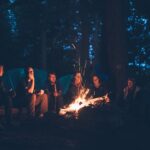
A campfire is a natural gathering point, but conversation does not always arrive on schedule. Bring a few easy prompts: “What’s the best meal you’ve ever had outdoors?” or “Which animal would be the worst campground neighbor?” Let the silliness grow from there.
Try these simple games:
- Two truths and a lie: A familiar favorite that works for mixed ages.
- Fortunately, unfortunately: Take turns building a story, alternating good and bad plot twists.
- Name that sound: Listen quietly for a minute, then compare what everyone heard.
- Campfire alphabet: Name animals, foods, or places in alphabetical order.
- Story circle: Each person adds one sentence to a shared story.
- Would you rather? Keep questions kind and age-appropriate.
Fire safety comes first. Use only designated fire rings where allowed, supervise children closely, and fully extinguish a fire before leaving or going to bed. The National Park Service explains safe campfire practices. If fire restrictions are in effect, swap the campfire plan for lantern-lit storytelling and toasted treats cooked by an approved method.
🃏 Card Games, Board Games, and Group Activities
A standard deck of cards is a camping classic for a reason: it is light, compact, and supports dozens of games. For a small game box, choose games with durable pieces, short rounds, and simple rules.
| Game or gear | Works well for | Why bring it |
|---|---|---|
| Standard deck of cards | Couples, families, groups | Almost no packing space |
| Taco Cat Goat Cheese Pizza | Fast, lively group play | Quick rounds and easy-to-learn rules |
| Monopoly Deal | Card-game fans | More compact than a full board game |
| Phase 10 or Skip-Bo | Family game nights | Familiar, portable play |
| Farkle dice | Groups and camp-table play | A small dice set creates lots of replay |
| Travel chess or checkers | Two players | Good for slow afternoons |
| Waterproof playing cards | Wet or sandy settings | Easier to wipe clean |
These titles are suggestions, not a requirement to pack the entire game cupboard. We like one familiar game and one new one. A newcomer keeps the group curious; a familiar game avoids a 25-minute rules seminar while the mosquitoes hold a committee meeting.
🌲 Outdoor Adventures and Nature Activities
The outdoors provides the main entertainment, and you do not need fancy equipment to take part. Bring a simple challenge and let the setting do the rest.
- Scavenger hunt: Look for shapes, textures, colors, or signs of wildlife. Observe animals from a distance and leave natural objects where you find them.
- Birdwatching: Binoculars and a field guide can turn a quiet morning into a spotting challenge.
- Trail bingo: Make a list of things to notice, such as a pine cone, a bridge, or a bird call.
- Map-reading practice: Use a paper map or a map downloaded for offline access; keep your route appropriate for the group.
- Outdoor photography: Try a “tiny details” theme—patterns in bark, clouds, or reflections.
- Knot-tying practice: Learn a few useful knots with spare cord before trying them on real gear.
- Stargazing: Check local conditions and use a red-light setting, if available, to preserve night vision.
- Nature journaling: Draw a leaf shape, record a weather change, or write down the birds you hear.
The National Park Service’s outdoor recreation resources offer safety guidance for outdoor activities. Follow local rules, stay on designated trails where required, and do not approach or feed wildlife.
🎨 Creative Crafts and Camping Keepsakes
Creative activities are especially handy during a rainy afternoon or a slow morning. Pack materials that are small, washable, and low-mess.
Ideas include:
- A travel sketchbook and pencils
- Watercolor pencils or a compact paint set
- A nature journal with pre-printed observation prompts
- Postcards to send from the trip
- A camp memory log with a page for each day
- A photo scavenger hunt using a phone or camera
- Friendship bracelets made with a small bundle of cord
Skip crafts that rely on collecting flowers, rocks, or other natural items. Make a drawing or take a photo instead; the keepsake travels home without taking a piece of the campsite with it. The Leave No Trace principles encourage campers to leave natural and cultural features undisturbed.
🎵 Music and Campsite Entertainment
Music can set a relaxed mood, but campground neighbors did not come to hear your full festival set. Keep volume low, follow quiet hours, and use headphones when appropriate.
- Download playlists, podcasts, or audiobooks before leaving home.
- Bring a compact instrument only if you can play it quietly and respectfully.
- Use a speaker sparingly and turn it off during quiet hours.
- Pack a power bank if your phone is serving as your music player, camera, and navigation device.
A speaker is an optional extra, not a substitute for campsite sound. Wind through trees and the chorus of evening insects are free, and they rarely ask you to skip a track.
🍫 Fun Camp Cooking and Treats
Food can be an activity as well as a meal. Give everyone a simple job—washing produce, assembling wraps, mixing trail snacks, or building a s’more. For food planning and storage ideas, see Camping Food and Nutrition.
Good low-fuss ideas:
- Build-your-own tacos or wraps
- Foil-packet vegetables and proteins, cooked safely
- Pancakes with a few topping choices
- Hot chocolate or a favorite tea
- S’mores, if a permitted fire or suitable cooking setup is available
- Trail mix assembled at camp
- A seasoning tube for adding flavor without a full spice rack
Keep perishable food cold and separate from ready-to-eat food. Follow food-safety guidance from the USDA and local wildlife-storage rules. In bear country, food and scented items may need to be stored in approved bear-resistant containers or lockers; check the destination’s instructions before you arrive.
🐕 Camping Fun for Kids, Dogs, and the Whole Family
For children, the best activity often has an easy start and no long explanation. Let them help choose one activity before the trip, then offer options when their attention changes.
Kid-friendly picks:
- A scavenger hunt with picture clues
- A lightweight ball, jump rope, or flying disc
- A nature journal
- Glow markers or headlamps for an early evening walk
- A simple card game
- A small binocular set for wildlife observation
For dogs, pack familiar gear: leash, food, water bowl, waste bags, and a secure sleeping spot. Check the campground’s pet rules and keep dogs under control around wildlife and other campers. The National Park Service pet guidance explains that rules vary by park and location.
A useful family trick: make a camp activity tote with cards, pencils, scavenger sheets, and a small game. One parent in our crew calls it the “boredom box.” It is less dramatic than the name suggests and much more useful than hauling a full toy chest.
🍳 Fun Camp Kitchen Gear and Easy Camping Snacks
A few kitchen extras can make camp meals feel special without turning dinner into a catering operation. Think one multipurpose tool, a small flavor upgrade, and a treat.
| Kitchen item | Benefit | Trade-off |
|---|---|---|
| Compact mess kit, such as the UCO Gear Mess Kit | Nests plates and utensils together | Check that it suits your group size |
| Jetboil stove system | Convenient for boiling water on supported trips | Requires compatible fuel and careful use |
| Small seasoning kit | Adds flavor with little space | Repack spices securely to avoid leaks |
| Insulated mug | Keeps a hot drink enjoyable longer | Takes up more space than a basic cup |
| Collapsible wash basin | Helps organize dishwashing | Not necessary for every short trip |
| Reusable food containers | Useful for leftovers and snacks | Adds bulk if you bring too many |
For simple snacks, bring shelf-stable options you already enjoy: nuts, crackers, dried fruit, granola bars, or jerky. Pack foods with allergies and dietary needs in mind, and store them according to local wildlife guidance.
Step-by-step: make camp cooking more fun without more work
- Choose one meal everyone can customize. Tacos, wraps, baked potatoes, and oatmeal work well.
- Prep at home where practical. Wash and portion ingredients, then pack them safely.
- Give each camper a small role. Keep children away from hot cookware and flames.
- Add one flavor boost. A spice blend, sauce, or favorite topping is enough.
- Plan cleanup before cooking. Set out wash water, a scraper, and a place for food waste.
Check stove instructions and campground restrictions before lighting any cooking device. For more gear ideas, see our Camping Gear Reviews.
🚿 Camp Bathroom Comforts and Clean-Up Essentials
Bathroom comfort may not sound like entertainment, but a quick, clean reset can rescue a long, sweaty day. Bring the basics that fit your campsite’s facilities and your trip length.
- Quick-dry towel
- Toiletries in a small, leak-resistant bag
- Hand sanitizer and toilet paper, as appropriate
- Wet wipes for practical cleanup, if needed
- A small bag for packing out used wipes and other waste
- Shower sandals for shared facilities
- A brush or comb and any personal care essentials
Do not leave wipes behind, even if packaging describes them as biodegradable or compostable. Pack them out and dispose of them properly. Follow campground sanitation rules and avoid washing soap or food residue into waterways.
For longer trips, a collapsible basin or camp sink can make washing more organized. For a short stay at a campground with sinks and showers, it may simply be one more item to store. Choose the level of convenience that matches your setup.
😴 Cozy Sleep Gear for a Better Night Outdoors
Good sleep can make the next day more fun than any gadget. Prioritize a sleeping bag suited to the expected conditions, a sleeping pad that works for your sleep style, and a dry layer for bedtime. The NPS camping safety advice is a useful place to review basic campsite preparation.
| Sleep comfort item | Why campers like it | Keep in mind |
|---|---|---|
| Sleeping pad | Adds cushioning and insulation from the ground | Comfort and warmth ratings vary |
| Pillow or stuff sack pillow | Makes familiar sleep positions easier | A compressible pillow adds bulk |
| Sleep mask | Helps in bright campgrounds or early daylight | Not useful for everyone |
| Earplugs | Can reduce disruptive campground noise | Keep them handy and use safely |
| Warm sleep layers | Help manage cool nights | Avoid relying on clothing alone instead of suitable sleep gear |
| Camp slippers | Convenient for short nighttime walks around camp | Use headlamps and watch for uneven ground |
| Hammock | A relaxing daytime lounge when trees and rules permit | Bring suitable suspension and check local regulations |
One of our campers packs slippers even on car-camping trips and swears by them. Another says they are an unnecessary luxury. Both are right: the best comfort extras are the ones you will actually use.
🩹 Safety, First Aid, and Comfort Items Worth Bringing
Fun should not mean improvising around preventable problems. Bring a first-aid kit suitable for your group and activities, plus personal medications and emergency contacts. The American Red Cross first-aid guidance can help you review basic preparedness; it is not a substitute for training or professional medical advice.
Helpful safety and comfort basics
- First-aid kit, checked before the trip
- Personal medications and copies of essential instructions
- Sunscreen and sunglasses
- Insect repellent appropriate for your destination
- Headlamp or flashlight for each camper
- Water bottles and a plan for safe drinking water
- Weather-appropriate layers and rain protection
- Map and route details, including offline access
- Whistle for emergency signaling
- Emergency contact and check-in plan
A simple safety check before an activity
- Check conditions: weather, water, trail status, fire restrictions, and local advisories.
- Set a boundary: tell the group where to go and when to return.
- Bring the right gear: water, light, layers, and activity-specific equipment.
- Assign a check-in plan: especially for children, solo campers, or groups splitting up.
- Know how to get help: identify the campground host, ranger station, or emergency number for the area.
For remote camping, a phone may not have service. A paper map and appropriate emergency communication plan matter more than a collection of novelty gadgets. Our Backpacking Gear Basics guide can help you think through weight and essentials.
📱 Electronics and Entertainment: What to Pack and What to Leave Home
Electronics can make a trip smoother: a phone can hold maps, photos, downloaded entertainment, and emergency information. They can also run out of power precisely when you need them. Plan before relying on them.
| Device or accessory | Useful for | Limit or drawback |
|---|---|---|
| Phone with offline maps | Navigation, photos, emergency contact | Battery and service may be limited |
| Power bank | Charging small devices | Adds weight and needs charging at home |
| Solar charger | Supplementary charging in suitable sunlight | Output depends on conditions and model |
| Headlamp | Hands-free light | Carry spare batteries or recharge as required |
| Bluetooth speaker | Shared music at camp | Noise can disturb other campers |
| E-reader or tablet | Books and pre-downloaded entertainment | Protect it from water and impact |
| Camera | Trip photos | Extra batteries and storage need planning |
The FCC emergency preparedness resources offer useful information about staying prepared during emergencies. For camping, download maps, music, books, and films before you leave. Treat a power bank as backup, not as your only safety plan.
Our crew’s compromise: keep daytime activities mostly screen-free, then use a phone or e-reader for a quiet hour or rainy evening. The device is a tool, not the camp director.
👕 Camping Clothes for Changing Weather
Clothing can make ordinary activities comfortable or turn a mild change in weather into a memorable complaint. Pack layers that suit the forecast, terrain, and planned activities.
- Comfortable walking shoes or boots appropriate to the route
- Several pairs of dry socks
- A warm layer for cool evenings
- Rain jacket or other suitable rain protection
- Sun hat and sunglasses
- Swimsuit and quick-dry layer if swimming is planned
- Sleep clothes kept dry in a bag
- Camp clothes you do not mind getting smoky or dusty
Avoid packing only for the forecast’s high temperature. Nights, wind, shade, and rain can change how warm you feel. Check the destination forecast shortly before leaving, and follow local guidance for specialized conditions.
For a fuller packing plan, see Camping Preparation Guide and our Backpacking Gear Basics for advice on keeping clothing compact.
🧳 How to Pack Fun Camping Gear Without Overpacking
Fun gear should make the trip better, not take over the car. A good packing system starts with the activities you expect to do and ends with a quick reality check: Will we use this, and where will it go?
Step-by-step packing method
- List the trip’s likely activities. Choose a few that match the place and your group.
- Pick one compact option per category. For example: one card game, one outdoor game, one quiet activity, and one rainy-day backup.
- Choose multipurpose items. A headlamp is useful for chores, walks, and after-dark games.
- Separate shared gear from personal gear. Put family activities in one labeled tote.
- Protect electronics and dry items. Use suitable waterproof or dry bags where needed.
- Review weight and storage. Remove duplicates and anything that needs more gear than it adds value.
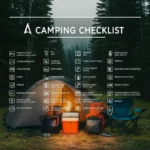
- Use a checklist. Track what is packed, what needs charging, and what needs to be bought or borrowed.
The Camping Checklist™ trip-planning app helps organize what you need before departure. For camping and hiking app ideas, browse Camping and Hiking Apps.
| Packing choice | Pack it when… | Leave it when… |
|---|---|---|
| Large yard game | You have space, a group, and a suitable play area | You are backpacking or camping in a crowded site |
| Portable speaker | You can keep volume considerate and follow quiet hours | The setting calls for quiet or the campground restricts amplified sound |
| Solar gadget | You expect suitable charging conditions and understand its limits | You need dependable emergency power |
| Extra comfort item | It directly improves sleep, warmth, or relaxation | It is a duplicate you rarely use |
| Craft supplies | They are compact and low-mess | They require collecting materials or create waste |
One experienced camper in our crew says the goal is a list that can be packed quickly; another prefers checking every item twice. The middle ground is a short master list plus a trip-specific activity list. Efficient, but not so minimalist that your “entertainment plan” is one pine cone and a shrug.
🌦️ Choosing Fun Camping Activities for Your Trip
Choose activities around who is coming, what the site offers, and what the weather may do. The most impressive gear is not automatically the most enjoyable. A game that gets played twice is often a better choice than a large item that stays in its bag.
Family Camping and Activities for Kids
Children often enjoy having a little responsibility as well as play. Let them help pick a trail, pack their own activity pouch, or choose a meal topping. Keep activities flexible and take breaks before everyone gets tired and hungry.
Try:
- Nature bingo or a scavenger hunt
- A short walk to a viewpoint or visitor center
- A simple ball game in a permitted open space
- Camp cooking with age-appropriate tasks
- Storytelling and card games after dinner
Use clear boundaries for water, roads, fires, and trails. Keep close supervision appropriate to the child’s age and the surroundings.
Couples’ Camping and Romantic Campsite Ideas
For two, fun can be deliberately simple: a picnic with a view, a shared playlist played quietly, a card game, a sunset walk, or coffee outside the tent. Bring a compact blanket or two camp chairs if sitting comfortably matters to you.
A modest plan leaves room for the best part: changing your mind when the light gets lovely or the trail takes longer than expected. And yes, a double sleeping bag can sound romantic. Check that it suits the weather and both sleepers before making it the centerpiece of the packing list.
Rainy-Day, Cold-Weather, and Hot-Weather Camping Fun
Rainy-day ideas:
- Cards, dice, travel games, or a puzzle
- Downloaded audiobooks or films
- Journaling, sketching, or postcards
- A covered visit to a nearby visitor center, if open
Cold-weather ideas:
- Short walks with warm layers
- Hot drinks and an easy camp meal
- Stargazing when conditions allow
- Indoor-style games in an appropriate sheltered area
Hot-weather ideas:
- Early or late walks rather than the hottest part of the day
- Shaded reading or games
- Water activities only where allowed and when conditions are safe
- Frequent water breaks and sun protection
Follow weather alerts and local safety instructions. The National Weather Service provides weather safety information, while campground staff can give site-specific advice.
Solo Camping Ideas for Staying Entertained
Solo camping can be quiet without being dull. Bring activities that you enjoy independently:
- Photography, birdwatching, or nature journaling
- A book or downloaded audiobook
- A short, planned hike
- A simple camp meal you look forward to
- A small game, puzzle, or creative project
- A check-in plan with someone at home
Before setting out, share your itinerary with a trusted person and plan for limited connectivity. For more app and navigation resources, visit Camping and Hiking Apps.
♻️ Leave No Trace: Keep Camping Fun Friendly to Nature
The best camp activity does not leave a mess for the next group—or the local wildlife. Follow the Leave No Trace principles and the specific rules for your campground or public land.
- Pack out all trash, including snack wrappers and used wipes.
- Leave natural objects where they are. Take photos and make sketches instead.
- Respect wildlife: observe from a distance, never feed animals, and store food correctly.
- Use established trails and campsites where required.
- Keep noise considerate, especially during quiet hours.
- Follow fire rules and fully extinguish permitted fires.
- Choose reusable gear when practical, and pack out anything you bring in.
For a family activity with a conservation angle, make a campsite check a group challenge: everyone looks for their own litter and checks the shared area before leaving. The reward is a clean site and no mysterious granola wrapper stuck to the bottom of the camp chair.