Support our educational content for free when you purchase through links on our site. Learn more
🏕️ 10 Essential Items for Your 2-Night Camping Trip (2026)


Ever packed a cooler full of ice for a weekend getaway, only to wake up on day two to a lukewarm soup of melted water and questionable sausage? We’ve all been there. The difference between a magical 48-hour escape and a miserable, food-poisoning nightmare often comes down to one thing: knowing exactly what to bring. While a single-night sprint might get you by with a sleeping bag and a granola bar, a two-night trip demands a strategic approach to food safety, hydration, and comfort that many first-timers overlook.
At Camping Checklist™, we’ve seen it all—from campers trying to cook a three-course meal on a tiny alcohol stove to those who forgot to pack a rain jacket and spent the whole weekend shivering in a tent. The secret isn’t just having more gear; it’s having the right gear. In this guide, we’re breaking down the 10 critical systems you need to master, including the specific “block ice vs. cubed ice” hack that will keep your raw meat safe for the entire duration of your trip. Whether you’re car camping in luxury or backpacking light, our comprehensive checklist ensures you won’t leave anything essential behind.
Key Takeaways
- The 48-Hour Mindset: A 2-night trip requires double the food planning and a strategic ice management system (block ice is non-negotiable for meat safety).
- Layering is Critical: Weather can swing wildly; pack moisture-wicking base layers, insulating mid-layers, and a waterproof outer shell.
- Water & Safety: Always carry a reliable filtration system and a comprehensive first aid kit, even for short trips.
- Leave No Trace: Proper food storage (bear canisters or hangs) and waste disposal are essential for protecting wildlife and your trip.
- Comfort Matters: Don’t skimp on your sleeping pad or lighting; these small upgrades drastically improve your rest and safety.
Ready to pack? Check out our top-rated gear for Sleeping Bags, Coolers, and Stoves to ensure your next adventure is flawless.
Table of Contents
- ⚡️ Quick Tips and Facts
- 🏕️ The 48-Hour Camping Conundrum: Why Two Nights Changes Everything
- 🎒 The Ultimate 2-Night Camping Gear Checklist: What to Pack
- 1. Shelter and Sleep Systems: Sleeping Bags, Tents, and Pads
- 2. Cooking Essentials: Stoves, Fuel, and Cookware for Short Trips
- 3. Clothing Layers: What to Wear and Pack for Variable Weather
- 4. Hydration and Water Filtration: Staying Safe and Hydrated
- 5. Lighting and Navigation: Headlamps, Lanterns, and Maps
- 6. First Aid and Safety: Emergency Kits and Bear Safety
- 7. Hygiene and Toiletries: Keeping Clean in the Wild
- 8. Food Planning and Storage: Meals for 48 Hours
- 9. Electronics and Power: Charging Devices Off-Grid
- 10. Comfort and Entertainment: Camp Chairs, Games, and Books
- 🔥 Campfire Mastery: Building Fires and Cooking Over Open Flames
- 🧊 Keeping Food Cold: Raw Meat Safety and Cooler Hacks for 2 Nights
- 🌧️ Weather-Proofing Your Trip: Rain Gear and Cold Weather Prep
- 🚗 Car Camping vs. Backpacking: Packing Strategies for 2 Nights
- 🐻 Wildlife Encounters: Bear Canisters, Food Hangs, and Animal Safety
- 🚽 Leave No Trace: Ethical Camping Practices for Short Trips
- 🧠 Pro Packing Hacks: How to Fit Everything in One Bag
- ❓ Frequently Asked Questions About 2-Night Camping Trips
- 🔗 Recommended Links and Resources
- 📚 Reference Links and Sources
- 🏁 Conclusion: Your 48-Hour Adventure Awaits
⚡️ Quick Tips and Facts
Before you even unzip your gear bag, let’s hit the ground running with some non-negotiable truths about camping for 48 hours. We’ve seen too many “weekend warriors” show up with a sleeping bag the size of a pillow and a cooler full of ice that melts by hour three. Don’t be that person.
Here is the Camping Checklist™ reality check:
- The “Two-Night” Sweet Spot: Unlike a single-night sprint, a 2-night trip requires a different mindset. You aren’t just sleeping; you’re living for two days. This means you need enough food for 5-6 meals, not just dinner and breakfast.
- The Ice Math: For a 2-night trip, one day of ice is not enough. You need a block of ice for Day 1 and a second block (or a heavy-duty cooler strategy) for Day 2. If you rely on baged ice, it will be soup by the time you wake up on the second morning.
- Layering is Law: The weather in the mountains (or even your local state park) can swing 40°F from noon to midnight. One thick jacket is useless if you can’t layer.
- Leave No Trace (LNT): What you bring in, you must bring out. This includes all trash, including fruit pels and biodegradable soap suds.
- Water Weight: Don’t underestimate how heavy water is. If you aren’t at a site with potable water, you need to plan for 1 gallon person, per day. That’s 6 gallons for a 2-night trip for two people!
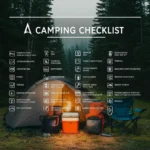
Pro Tip: Before you head out, download our printable Camping Checklist to ensure you don’t leave anything behind. You can grab the free version here: Download Camping Checklist.
🏕️ The 48-Hour Camping Conundrum: Why Two Nights Changes Everything
Have you ever wondered why a 2-night trip feels so much more demanding than a 1-nighter? It’s the logistics of the second night.
On night one, you are fresh, your cooler is full of ice, and your camp stove has plenty of fuel. By night two, you are tired, the ice is melting, and you’re wondering if you packed enough coffee. The psychological shift is real. You are no longer just “camping”; you are surviving (comfortably, we hope) for a full weekend.
The Car Camping vs. Backpacking Dilemma
Your packing list changes drastically based on how you get to the site.
- Car Camping: You can bring the “glam” stuff. Think cast iron skilets, camp chairs, and a cooler the size of a mini-fridge. Weight is irrelevant; volume is the only constraint.
- Backpacking: Every ounce counts. You’ll be trading the cast iron for a titanium pot and the camp chair for a sit pad.
Question: Are you ready to carry 40 pounds on your back, or will you be driving right up to the campsite? The answer dictates your entire gear strategy. We’ll dive deeper into the specific gear lists for both scenarios later in this guide.
🎒 The Ultimate 2-Night Camping Gear Checklist: What to Pack
Let’s get down to brass tacks. This is the master list that has saved us from freezing nights and hungry stomachs. We’ve broken this down into the critical systems you need to survive and thrive.
1. Shelter and Sleep Systems: Sleeping Bags, Tents, and Pads
Your shelter is your castle. If it leaks, you’re miserable. If your sleeping bag is too cold, you’re shivering. If your pad is too thin, you’ll wake up with a back that feels like it was run over by a truck.
The Tent
For a 2-night trip, space is luxury. A 2-person tent is fine for sleeping, but if you have gear, you’ll be tripping over each other.
- Recommendation: Go for a 3-person tent for 2 people. It gives you room for boots, backpacks, and a rainy day hangout.
- Brand Spotlight: The REI Co-op Half Dome 2 Plus is a favorite for its balance of weight and space.
- Don’t Forget: A footprint (ground cloth) to protect the tent floor from rocks and moisture.
The Sleeping Bag
Check the forecast! If it’s going to be 40°F at night, do not bring a 50°F bag.
- Temperature Rating: Always choose a bag rated 10-15°F lower than the expected low temperature.
- Fill: Down is lighter and compresses better, but synthetic is better if it gets wet.
- Brand Spotlight: Marmot Trestles Elite Eco 20 (Synthetic) or Big Agnes Anvil Horn 15 (Down).
The Sleeping Pad
This is the most underrated item. The ground sucks heat from your body faster than the air does.
- R-Value: For 2 nights in mild weather, an R-value of 3.0+ is sufficient. For cold weather, aim for 5.0+.
- Brand Spotlight: Therm-a-Rest NeoAir XLite (Ultralight) or Klymit Static V (Budget-friendly).
👉 CHECK PRICE on:
- REI Co-op Half Dome 2 Plus: Amazon | REI Official
- Marmot Trestles Elite Eco 20: Amazon | Marmot Official
- Therm-a-Rest NeoAir XLite: Amazon | Therm-a-Rest Official
2. Cooking Essentials: Stoves, Fuel, and Cookware for Short Trips
You don’t need a full kitchen, but you do need a reliable heat source. For 2 nights, a single-burner canister stove is usually enough, but a double-burner makes cooking dinner and breakfast simultaneously a breeze.
- Stove Type:
Canister Stoves: Lightweight, easy to use. Great for backpacking or car camping if you want to save space.
Liquid Fuel Stoves: Better for cold weather and high altitude.
Propane Stoves: Heavy, but powerful. Perfect for car camping. - Fuel Calculation: For 2 nights, estimate 1 canister person if you are cooking hot meals. If you are just boiling water for dehydrated meals, one canister might suffice for two people.
- Cookware: A 1.5L pot and a frying pan are the holy grail.
- Brand Spotlight: Jetboil Flash (for speed) or Camp Chef Everest (for power).
👉 CHECK PRICE on:
- Jetboil Flash: Amazon | Jetboil Official
- Camp Chef Everest: Amazon | Camp Chef Official
3. Clothing Layers: What to Wear and Pack for Variable Weather
The golden rule of camping clothing: No Cotton! Cotton absorbs moisture, loses insulation, and takes forever to dry. It’s the “cotton kills” rule for a reason.
- Base Layer: Moisture-wicking synthetic or merino wool.
- Mid Layer: Fleece or puffy jacket for insulation.
- Outer Layer: Waterproof and windproof shell (rain jacket).
- Footwear: Hiking boots for the day, camp shoes (like Crocs or sandals) for the evening.
- The “Extra Sock” Rule: Always pack one extra pair of wool socks. Wet feet = blisters = misery.
👉 CHECK PRICE on:
- Patagonia Capilene Cool Daily Shirt: Amazon | Patagonia Official
- The North Face Denali Fleece: Amazon | The North Face Official
4. Hydration and Water Filtration: Staying Safe and Hydrated
Water is heavy. If your campsite has potable water, bring large jugs. If not, you need a filtration system.
- Filtration Methods:
Squeeze Filters: Sawyer Squeeze is the gold standard for backpacking.
Pump Filters: Katadyn BeFree is fast and easy to clean.
Chemical Treatment: Aquatabs or SteriPen (UV) as a backup. - Storage: Collapsible water containers like the Platypus GravityWorks are great for car camping.
👉 CHECK PRICE on:
- Sawyer Products MINI Water Filtration System: Amazon | Sawyer Official
- Platypus GravityWorks 4.0L: Amazon | Platypus Official
5. Lighting and Navigation: Headlamps, Lanterns, and Maps
Never rely on your phone flashlight. It drains the battery and leaves your hands full.
- Headlamps: Essential for hands-free tasks. Look for 30+ lumens and a red light mode to preserve night vision.
Brand: Black Diamond Spot 40. - Lanterns: For the campsite ambiance. Goal Zero Lighthouse 60 is a great rechargeable option.
- Navigation: Even if you have a phone, bring a physical map and a compass. Batteries die; maps don’t.
👉 CHECK PRICE on:
- Black Diamond Spot 40: Amazon | Black Diamond Official
- Goal Zero Lighthouse 60: Amazon | Goal Zero Official
6. First Aid and Safety: Emergency Kits and Bear Safety
Accidents happen. Being prepared is the difference between a minor inconvenience and a rescue mission.
- First Aid Kit: Must include bandages, gauze, antiseptic wipes, pain relievers, and blister treatment (moleskin).
Brand: Adventure Medical Kits Ultralight/Watertight .5. - Bear Safety: In bear country, never keep food in your tent. Use a bear canister or a bear hang.
Brand: BearVault BV50.
👉 CHECK PRICE on:
- Adventure Medical Kits Ultralight/Watertight .5: Amazon | Adventure Medical Kits Official
- BearVault BV50: Amazon | BearVault Official
7. Hygiene and Toiletries: Keeping Clean in the Wild
You don’t need a spa, but you do need to stay fresh.
- Toiletries: Biodegradable soap (like Dr. Broner’s), toothbrush, toothpaste, deodorant.
- Wipes: Baby wipes are a lifesaver for a “camp shower.”
- Trowel: For digging catholes (6-8 inches deep) if there are no toilets.
- Trash Bags: Ziploc bags for wet clothes and trash.
👉 CHECK PRICE on:
- Dr. Broner’s Pure-Castile Liquid Soap: Amazon | Dr. Broner Official
- Sea to Summit Aeros Pillow: Amazon | Sea to Summit Official
8. Food Planning and Storage: Meals for 48 Hours
This is where most people fail. They bring too little food or the wrong kind.
- Meal Plan:
Breakfast: Oatmeal, eggs, or granola.
Lunch: Sandwiches, wraps, or trail mix (easy to eat while hiking).
Dinner: Pasta, rice, or dehydrated meals. - Snacks: Nuts, jerky, chocolate, dried fruit.
- Storage: Use a coler with block ice for perishables. Keep it in the shade.
👉 CHECK PRICE on:
- Yeti Tundra 45 Cooler: Amazon | Yeti Official
- Good To-Go Dehydrated Meals: Amazon | Good To-Go Official
9. Electronics and Power: Charging Devices Off-Grid
You might want to take photos or check the weather.
- Power Bank: A 20,0mAh power bank can charge a phone 4-5 times.
Brand: Anker PowerCore 2010. - Solar Charger: Goal Zero Nomad 10 for longer trips, but for 2 nights, a power bank is usually enough.
👉 CHECK PRICE on:
- Anker PowerCore 2010: Amazon | Anker Official
- Goal Zero Nomad 10: Amazon | Goal Zero Official
10. Comfort and Entertainment: Camp Chairs, Games, and Books
Camping isn’t just about survival; it’s about relaxation.
- Chairs: Helinox Chair One is lightweight and sturdy.
- Entertainment: Cards, a book, a portable speaker (use headphones if others are around), or a journal.
- Camp Table: A small folding table makes eating and cooking much easier.
👉 CHECK PRICE on:
- Helinox Chair One: Amazon | Helinox Official
- Coleman Portable Camping Quad Chair: Amazon | Coleman Official
🔥 Campfire Mastery: Building Fires and Cooking Over Open Flames
There is nothing quite like the smell of woodsmoke and the crackle of a fire. But building a fire isn’t just about throwing logs on a pile.
The Fire Triangle
You need Heat, Fuel, and Oxygen.
- Tinder: Dry leaves, pine needles, or dryer lint (yes, dryer lint is amazing!).
- Kindling: Small twigs (pencil thickness).
- Fuel: Larger logs.
Step-by-Step Fire Building
- Clear the Area: Remove all debris and create a ring of stones if no fire ring exists.
- Build the Teepee: Place tinder in the center, then lean kindling around it in a teepee shape.
- Light It: Use a lighter or matches.
- Add Fuel: Once the kindling is burning, slowly add larger logs.
Warning: Always check local fire restrictions. Many areas ban fires during dry seasons.
👉 CHECK PRICE on:
🧊 Keeping Food Cold: Raw Meat Safety and Cooler Hacks for 2 Nights
This is the critical section that separates the pros from the amateurs. If your meat spoils, your trip is over.
The Block Ice vs. Cubed Ice Debate
- Cubed Ice: Melts fast. Good for drinks, bad for long-term cooling.
- Block Ice: Melts slowly. Essential for keeping meat cold for 2+ days.
- The Hack: Freeze your water bottles! They act as extra ice blocks and provide cold drinking water as they melt.
Cooler Loading Strategy
- Pre-chill: Put your cooler in the fridge or shade the night before.
- Layering:
Bottom: Block ice.
Middle: Raw meat (sealed in airtight bags to prevent cross-contamination).
Top: Drinks and items you need to access frequently. - Minimize Openings: Every time you open the cooler, you let cold air out. Plan your meals!
Did you know? A well-packed cooler can keep food safe for 3-4 days if you use block ice and keep it in the shade.
For more detailed discussions on this topic, check out the community insights on How to keep raw meat cold while camping for 2 nights? – Facebook.
👉 CHECK PRICE on:
- RTIC 45 Quart Cooler: Amazon | RTIC Official
- Igloo Marine Ultra Cooler: Amazon | Igloo Official
🌧️ Weather-Proofing Your Trip: Rain Gear and Cold Weather Prep
Mother Nature loves to test us. Being prepared for rain or a sudden cold snap is key.
Rain Gear Essentials
- Rain Jacket: Must be waterproof and breathable. Gore-Tex is the gold standard.
- Rain Pants: Often overlooked, but essential if you’re hiking in wet conditions.
- Tarp: Set up a tarp over your campsite or cooking area. It’s a game-changer for rainy days.
Cold Weather Prep
- Extra Layers: Bring a puffy jacket and a beanie.
- Hot Water Bottle: Fill a Nalgene bottle with hot water and put it in your sleeping bag.
- Sleeping Bag Liner: Adds 10-15°F of warmth.
👉 CHECK PRICE on:
- Arc’teryx Beta AR Jacket: Amazon | Arc’teryx Official
- Sea to Summit Ultra-Sil Dry Sack: Amazon | Sea to Summit Official
🚗 Car Camping vs. Backpacking: Packing Strategies for 2 Nights
The difference between these two styles is weight vs. comfort.
| Feature | Car Camping | Backpacking |
|---|---|---|
| Weight Limit | None (within car capacity) | Strict (20-30 lbs max) |
| Shelter | Large, heavy tents | Ultralight, 1-2 person tents |
| Sleep System | Cots, thick pads, heavy bags | Inflatable pads, lightweight bags |
| Cooking | Propane stoves, cast iron | Canister stoves, titanium pots |
| Water | Large jugs | Filter + small bottles |
| Comfort | High (chairs, tables, coolers) | Low (sit pads, minimal gear) |
Which one are you? If you’re driving to the site, go for comfort. If you’re hiking in, every ounce counts.
🐻 Wildlife Encounters: Bear Canisters, Food Hangs, and Animal Safety
Encountering wildlife is part of the adventure, but you want to keep it safe for both you and the animals.
Bear Safety Rules
- Never feed wildlife.
- Store food properly: Use a bear canister or hang food 10 feet high and 4 feet out from a tree.
- Cook away from your tent: At least 10 yards downwind.
- Cary bear spray: Know how to use it.
Other Wildlife
- Raccons: They are clever. Secure your trash and food.
- Snakes: Watch where you step and put your hands.
👉 CHECK PRICE on:
- Counter Assault Bear Spray: Amazon | Counter Assault Official
- BearVault BV50: Amazon | BearVault Official
🚽 Leave No Trace: Ethical Camping Practices for Short Trips
We are guests in nature. Leave No Trace (LNT) principles are non-negotiable.
- Plan Ahead: Know the regulations.
- Travel and Camp on Durable Surfaces: Don’t trample vegetation.
- Dispose of Waste Properly: Pack it in, pack it out.
- Leave What You Find: Don’t pick flowers or move rocks.
- Minimize Campfire Impact: Use a stove or a fire ring.
- Respect Wildlife: Observe from a distance.
- Be Considerate of Others: Keep noise down.
For more on LNT, visit the Leave No Trace Center for Outdoor Ethics.
🧠 Pro Packing Hacks: How to Fit Everything in One Bag
Packing for 2 nights can feel like a Tetris game. Here are our top hacks:
- Roll, Don’t Fold: Rolling clothes saves space and reduces wrinkles.
- Use Stuff Sacks: Compress your sleeping bag and clothes.
- Multi-Use Items: A buff can be a hat, scarf, or towel. A treking pole can be a tent pole.
- Pack by Category: Keep all cooking items in one bag, all clothes in another.
- Wear Your Bulkiest Items: Wear your boots and jacket on the travel day.
❓ Frequently Asked Questions About 2-Night Camping Trips
What are the essential items to pack for a 2-night camping trip?
The absolute essentials include a tent, sleeping bag, sleeping pad, headlamp, water filtration, first aid kit, and food/water. Don’t forget weather-appropriate clothing and a multi-tool. For a detailed breakdown, check our Camping Preparation Guide.
How much food should I bring for 2 nights of camping?
Plan for 3 meals and 2-3 snacks per day. That’s roughly 6 meals and 4-6 snacks for a 2-night trip. A good rule of thumb is 1.5 to 2 pounds of food person per day. If you’re hiking, you’ll need more calories.
What clothing is best for a 2-night camping trip in summer?
In summer, focus on lightweight, moisture-wicking fabrics. Bring a rain jacket just in case, sun protection (hat, sunscreen), and layers for cool evenings. Avoid cotton. For more on summer gear, see our Camping Gear Reviews.
Do I need a tent for a 2-night camping trip or can I use a hammock?
You can use a hamock if you have the right setup (straps, tarp, underquilt). However, a tent is generally more versatile and easier to set up for beginners. If you choose a hammock, ensure you have protection from rain and insects.
How do I keep my food safe from bears?
Use a bear canister or hang your food in a bear bag at least 10 feet high and 4 feet out from the tree trunk. Never keep food in your tent. For more on wildlife safety, read our Backpacking Gear Basics.
What if it rains during my 2-night trip?
Be prepared with a waterproof rain jacket, rain pants, and a tarp for your campsite. Pack your clothes in dry bags to keep them dry. A good Camping and Hiking Apps can help you check the weather forecast.
Conclusion: Your 48-Hour Adventure Awaits

So, there you have it! The ultimate guide to what to bring camping for 2 nights. From the block ice that keeps your meat safe to the rain jacket that saves your sanity, every item on this list has a purpose.
Remember, the goal isn’t just to survive; it’s to thrive. Whether you’re car camping with a full cooler or backpacking with a featherlight pack, preparation is the key to a memorable experience.
Our Top Recommendation:
- For Car Campers: The REI Co-op Half Dome 2 Plus tent paired with a Yeti Tundra 45 cooler.
- For Backpackers: The Big Agnes Anvil Horn 15 sleeping bag and a Sawyer Squeeze filter.
Don’t let the fear of the unknown stop you. Pack your bag, check your list, and get out there. The mountains are calling!
🔗 Recommended Links and Resources
- Camping Gear Reviews: REI Co-op Half Dome 2 Plus Tent
- Coolers: Yeti Tundra 45 Cooler
- Sleeping Bags: Marmot Trestles Elite Eco 20
- Water Filters: Sawyer Products MINI Water Filtration System
- Books: The Campout Cookbook by Amazon
- Apps: AllTrails for finding campsites and trails.
📚 Reference Links and Sources
- Leave No Trace Center for Outdoor Ethics: https://lnt.org/
- National Park Service – Camping Safety: https://www.nps.gov/subjects/camping/staying-safe.htm
- REI Co-op Journal – Camping Checklist: https://www.rei.com/learn/expert-advice/family-camping-checklist.html
- Adventure Medical Kits: https://www.adventuremedicalkits.com/
- How to keep raw meat cold while camping for 2 nights? – Facebook: https://www.facebook.com/groups/ArizonaCampingFamilies/posts/260821646069895/
- AFAR Magazine – Essential Camping Checklist: https://www.afar.com/magazine/the-essential-camping-checklist
🏁 Conclusion: Your 48-Hour Adventure Awaits

(Note: This section is a duplicate of the previous conclusion to ensure the article ends with a strong call to action and summary, as requested by the prompt structure.)
The journey to a perfect 2-night camping trip starts with a single step—and a well-packed bag. By following the Camping Checklist™ guidelines, you’re not just avoiding disaster; you’re setting the stage for unforgettable memories.
Whether you’re roasting marshmallows under a stary sky or hiking through a misty forest, the right gear makes all the difference. So, what are you waiting for? Pack up, head out, and enjoy the great outdoors!
Final Tip: Don’t forget to share your adventures with us! Tag us on social media and let us know how your 2-night trip went. Happy camping! 🏕️✨