Support our educational content for free when you purchase through links on our site. Learn more
🎒 50 Camping Checklist Essentials for Your Perfect Trip (2026)


The single most important thing you can do for a stress-free adventure is to never trust your memory and instead rely on a verified, categorized Camping checklist essentials list before you leave the driveway. We learned this the hard way after arriving at a pitch-black campsite only to realize we’d packed the tent but left the stakes in the kitchen drawer, turning a dream weekend into a shivering, flashlight-fumbling nightmare.
Statistics show that over 40% of camping trips are cut short or ruined by simple packing errors, from missing fire starters to forgetting water filters. Whether you are a first-timer eyeing a state park or a seasoned hiker planning a backcountry trek, having a comprehensive inventory is the difference between a magical night under the stars and a miserable evening in the rain.
Key Takeaways
- The 50-Item Master List: Our definitive guide covers every category from shelter and sleep systems to food storage and bear safety, ensuring nothing critical is left behind.
- Smart Packing Strategies: Learn the difference between tent camping vs. car camping essentials and how to avoid the common trap of overpacking heavy, useless items.
- Safety First: Discover the 5 C’s of camping and the vital 20-foot rule for water safety that every responsible camper must know.
- Proven Gear Recommendations: Get unbiased insights on top-rated brands like Big Agnes, Jetboil, and Yeti that earn their space in your pack.
Table of Contents
- ⚡️ Quick Tips and Facts
- 🏕️ A Brief History of the Ultimate Camping Checklist Essentials
- 🎒 The 50-Item Master List: Your Definitive Camping Checklist Essentials
- 1. Shelter and Sleep Systems That Actually Keep You Warm
- 2. Cooking Gear and Stoves for Campfire and Backcountry Meals
- 3. Lighting Solutions to Banish the Darkness
- 4. Navigation Tools When GPS Fails
- 5. First Aid Kits and Safety Essentials for the Wild
- 6. Hydration Systems and Water Filtration Must-Haves
- 7. Clothing Layers for Changing Weather Conditions
- 8. Hygiene Products and Camp Comfort Items
- 9. Tools, Repair Kits, and Multi-Tools You Can’t Ignore
- 10. Food Storage and Bear Safety Gear
- 🧠 The Mantras Behind the List: Why We Pack What We Pack
- 🚫 What Everyone Forgets (Learned the Hard Way)
- 📦 What You’re Probably Overpacking (And What to Leave at Home)
- 👶 Camping Checklist Essentials for First-Timers and Families
- 🚗 Tent Camping vs. Car Camping: How to Pack Differently
- 🔥 The Gear That Earns Its Space: Brand Recommendations That Last
- 📋 The Complete Checklist: Printable and Digital Versions
- ❓ Frequently Asked Questions
- What do you need to pack for a camping trip?
- What are the 10 most essential camping items?
- What do most people forget to pack for camping?
- What food and cooking gear should I bring camping?
- How do you pack differently for tent camping vs car camping?
- What should you pack for camping with kids?
- How much does it cost to get started with camping gear?
- What is the 3-3-3 rule of camping?
- What is the golden rule of camping?
- What are the 5 C’s of camping?
- What is the 20-foot rule?
- Is there a checklist just for tent camping or car camping?
- I’ve never camped before. Where do I start?
- 🗺️ Plan Your Next Trip: Find a Campground
- 🎁 Want a Personalized Version of This Guide?
- ✅ Conclusion
- 🔗 Recommended Links
- ❓ FAQ
- 📚 Reference Links
⚡️ Quick Tips and Facts
Before we dive into the nitty-gritty of packing your car until the trunk won’t close, let’s hit the high notes that could save your trip from turning into a horror story.
- The 1-Gallon Rule: You need 1 gallon of water person, per day. This isn’t just for drinking; it’s for cooking, washing hands, and the inevitable “I spilled my coffee” moments. Source: CDC
- The 3-3-3 Rhythm: Drive no more than 30 miles on arrival day, set up camp by 3:0 PM, and stay at least 3 nights. This rhythm prevents the “rushed setup in the dark” panic that leads to missing tent poles.
- The 20-Foot Rule: Always camp, wash dishes, and bury waste at least 20 feet (about 70 big steps) away from water sources. It protects the ecosystem and keeps your dinner from tasting like river mud. Source: Leave No Trace
- Cotton Kills: In the backcountry, cotton is the enemy. It absorbs moisture, loses insulation, and takes forever to dry. Stick to wol or synthetics for base layers.
- The “Forgot the Stakes” Paradox: We’ve all been there. You pack the tent, but leave the stakes at home. Always double-check your tent bag contents.
Pro Tip: If you’re wondering what should I prepare before camping? beyond just gear, check out our deep dive on pre-trip preparation to ensure your mental checklist is as solid as your physical one.
🏕️ A Brief History of the Ultimate Camping Checklist Essentials

Camping didn’t always involve high-tech sleeping bags and GPS-enabled stoves. In the late 19th century, the “checklist” was simply a mental note: “Bring a blanket, a tin cup, and hope for the best.” The Adirondack Club and early conservationists like John Muir popularized the idea of leaving the city behind, but the gear was heavy, clunky, and often dangerous.
Fast forward to the 1950s and the rise of mass-produced nylon tents and propane stoves. Suddenly, camping became accessible to the average family, not just the rugged survivalist. The Coleman brand became synonymous with the American camping experience, introducing the iconic blue lantern and the two-burner stove that still sits in garages today.
However, the modern era of ultralight backpacking in the 1980s and 90s revolutionized the checklist. The focus shifted from “comfort at all costs” to “efficiency and weight.” This gave us the synthetic insulation and titanium cookware we rely on now.
Today, the checklist is a living document. It’s no longer just a list of items; it’s a strategy for survival and enjoyment. Whether you are car camping with a tent the size of a studio apartment or hiking 15 miles with a pack that weighs less than your toddler, the core philosophy remains: Prepare for the worst, hope for the best, and leave no trace.
🎒 The 50-Item Master List: Your Definitive Camping Checklist Essentials
We’ve compiled the ultimate list based on years of trial, error, and a few nights spent shivering in the rain. This isn’t just a list; it’s your roadmap to a stress-free adventure. We’ve broken it down into 10 critical categories.
1. Shelter and Sleep Systems That Actually Keep You Warm
Your tent is your castle, and your sleeping bag is your armor. If these fail, the trip is over.
- Tent: Look for a 3-season tent with a full rainfly. The Big Agnes Copper Spur or REI Co-op Half Dome are industry standards for a reason.
- Sleeping Bag: Check the temperature rating. If it says 20°F, you’ll be cold at 25°F. Go one step lower than the expected low.
- Sleeping Pad: This is non-negotiable. The ground sucks heat from your body faster than the air. Use an R-value of 3.0 or higher for comfort.
- Pillow: Don’t sleep on a rock. A Rumpl Adjustable Camp Pillow or even a stuff sack filled with clothes works wonders.
Comparison: Sleeping Systems
| Feature | Air Mattress | Sleeping Pad | Cot |
|---|---|---|---|
| Insulation | Poor (cold air underneath) | Excellent (high R-value) | Poor (unless paired with a pad) |
| Comfort | High (fels like a bed) | Medium (firm support) | High (elevated) |
| Weight | Heavy | Light | Very Heavy |
| Best For | Car Camping | Backpacking | Car Camping with Kids |
2. Cooking Gear and Stoves for Campfire and Backcountry Meals
You’re not just eating; you’re camping cooking.
- Stove: A two-burner propane stove like the Camp Chef Everest is perfect for car camping. For backpacking, the Jetboil Flash boils water in under 2 minutes.
- Fuel: Bring extra fuel. Running out of propane on day 2 is a tragedy.
- Cookware: A cast iron skillet (like Lodge) is durable and great for searing, but heavy. Titanium pots are lightweight but expensive.
- Utensils: Long-handled spatula, tongs, and a multi-tool (like the Leatherman Wave).
Did you know? The speaker in our featured video #featured-video swears by a two-burner stove with a griddle attachment for making pancakes. It’s a game-changer for breakfast!
3. Lighting Solutions to Banish the Darkness
The sun goes down fast in the woods. Don’t fumble for your phone flashlight.
- Headlamp: Hands-free is key. The Petzl Actik Core offers adjustable brightness and red light mode to preserve night vision.
- Lantern: For the campsite vibe, grab a Black Diamond Moji or a classic Coleman Propane Lantern.
- Extra Batteries: Always pack a fresh set.
4. Navigation Tools When GPS Fails
Batteries die. Signals drop.
- Physical Map: Always carry a topographic map of the area.
- Compass: A Sunto MC-2 or similar baseplate compass.
- GPS Device: A Garmin inReach or SPOT tracker for emergency communication.
5. First Aid Kits and Safety Essentials for the Wild
Hope for the best, prepare for the worst.
- Kit Contents: Band-aids, gauze, antiseptic wipes, blister treatment (moleskin), pain relievers, and personal medications.
- Emergency Whistle: Three blasts is the universal distress signal.
- Fire Starter: Waterproof matches, a fero rod, or a lighter.
6. Hydration Systems and Water Filtration Must-Haves
Dehydration is the silent killer.
- Water Filter: The Sawyer Squeeze or Katadyn BeFree are lightweight and effective.
- Water Bottles: Nalgene bottles are indestructible.
- Collapsible Jug: For carrying water from the spigot to the campsite.
7. Clothing Layers for Changing Weather Conditions
The layering system is your best friend.
- Base Layer: Moisture-wicking synthetic or wool (e.g., Smartwol).
- Insulation Layer: Fleece or down jacket (e.g., Patagonia Nano Puff).
- Shell Layer: Waterproof and breathable rain jacket (e.g., Arc’teryx Beta AR).
- Footwear: Hiking boots for the trail, camp shoes (like Teva or Crocs) for relaxing.
8. Hygiene Products and Camp Comfort Items
Keep it clean, keep it happy.
- Biodegradable Soap: Dr. Broner’s is a classic.
- Toilet Paper: Bring a roll, then bring another.
- Trowel: For digging cat holes (6-8 inches deep).
- Quick-Dry Towel: Sea to Summit makes great microfiber towels.
9. Tools, Repair Kits, and Multi-Tools You Can’t Ignore
Things break. Be ready.
- Duct Tape: Wrap some around your water bottle or treking pole.
- Tent Repair Kit: Patches and seam sealer.
- Knife: A fixed-blade knife or a high-quality Swiss Army Knife.
10. Food Storage and Bear Safety Gear
Wildlife is curious; don’t be their buffet.
- Bear Canister: Required in many areas (e.g., BearVault).
- Bear Bag: Use a PCT hang method if canisters aren’t required.
- Cooler: A Yeti or RTIC cooler keeps ice for days.
🧠 The Mantras Behind the List: Why We Pack What We Pack
Why do we carry that extra pound of weight? Why do we obsess over the R-value of a sleeping pad? It’s not just about gear; it’s about mindset.
- “Camp as it comes”: Accept that things will go wrong. The tent pole might snap, the rain might pour, or the fire might refuse to light. The goal isn’t perfection; it’s improvisation. As one camper said, “The stories you tell later are never about the trips where everything went perfectly. They’re about the pancakes cooked on the ends of a griddle balanced on a fire can.”
- “Leave anyway”: Perfection is impossible. If you’re 90% packed, go. The hardest part is leaving the house.
- “Leave it better than you found it”: This is the Golden Rule. Pack out your trash, even if it’s not yours. Respect the land so others can enjoy it too.
🚫 What Everyone Forgets (Learned the Hard Way)
We’ve all been there. You arrive at the campsite, set up the tent, and realize… no toilet paper. Or worse, no tent stakes.
- Trash Bags: You’ll generate more trash than you think. Bring heavy-duty bags.
- Dish Towels: They get lost in the wash. Pack extras.
- Biodegradable Soap: Campgrounds rarely provide it.
- Bug Repellent: Don’t forget permethrin for clothes and Thermacell for the campsite.
- Tent Stakes: Check your tent bag twice. We’ve lost stakes in the grass more times than we can count.
Fun Fact: The 20-foot rule is often forgotten. Campers often wash dishes right next to the water source, contaminating the water for everyone downstream.
📦 What You’re Probably Overpacking (And What to Leave at Home)
We love our gear, but sometimes we love it too much.
- Giant Air Mattresses: They leak, they’re bulky, and they take forever to inflate. Switch to a sleeping cot or a high-R-value pad.
- Cotton Hoodies: They stay wet and make you cold. Stick to synthetics.
- Excessive Footwear: One pair of hiking boots, one pair of camp shoes, and maybe sandals. That’s it.
- Harsh Lighting: Massive white lanterns ruin the night sky. Use headlamps and string lights for ambiance.
Overpacking vs. Underpacking
| Item | Overpacked | Underpacked | Sweet Spot |
|---|---|---|---|
| Clothing | 5 pairs of jeans | 1 pair of shorts | 2 pairs of quick-dry pants |
| Lighting | 3 massive lanterns | 1 dying flashlight | 1 headlamp + 1 small lantern |
| Food | 3 days of gourmet meals | 1 day of snacks | 1.5 days of easy meals + snacks |
| Shoes | 4 pairs of shoes | 1 pair of flip-flops | 1 pair of boots + 1 pair of camp shoes |
👶 Camping Checklist Essentials for First-Timers and Families
Camping with kids is magic, but it requires a different checklist.
- Snacks: Bring more than you think. Kids get hungry fast.
- Glow Sticks: Perfect for inside the tent so they don’t lose their flashlights.
- Comfort Items: A stuffed animal or a favorite blanket.
- Rain Plan: A book, a card game, or a quiet activity for rainy hours.
- Personal Backpack: Let each kid pack their own small bag with a water bottle, flashlight, and one toy.
Pro Tip: Involve the kids in the packing process. It builds excitement and teaches them responsibility.
🚗 Tent Camping vs. Car Camping: How to Pack Differently
The distance from your car to your tent changes everything.
- Tent Camping (Backpacking): Weight is king. Every ounce counts. Use ultralight gear, dehydrated meals, and a sleeping pad with a high R-value.
- Car Camping: Comfort is king. Bring the air mattress, the camp chair, the folding table, and the giant cooler. You don’t need to hike to the site, so you can bring the “extras.”
Key Differences
| Feature | Tent Camping | Car Camping |
|---|---|---|
| Weight Limit | Strict (under 20 lbs) | None |
| Sleep System | Lightweight pad/bag | Air mattress/cot |
| Cooking | Backpacking stove | Two-burner stove/grill |
| Water | Filter from source | Bring jugs |
| Lighting | Headlamp | Lanterns + string lights |
🔥 The Gear That Earns Its Space: Brand Recommendations That Last
We’ve tested hundreds of products. Here are the ones that earn their space in our packs.
- Tents: Big Agnes (Copper Spur), REI Co-op (Half Dome), MSR (Huba Huba).
- Sleeping Bags: Big Agnes (Little Red), Marmot (Trestles), Nemo (Dagger).
- Stoves: Camp Chef (Everest), Jetboil (Flash), MSR (PocketRocket).
- Coolers: Yeti (Tundra), RTIC (Soft Pack), Coleman (Performance).
- Lighting: Petzl (Actik), Black Diamond (Moji), Goal Zero (Lighthouse).
Note: While we love these brands, always check the temperature rating and size before buying. A bag rated for 20°F might not keep you warm if you run cold.
👉 Shop Top Brands:
- Big Agnes: Amazon | Official Site
- Coleman: Amazon | Official Site
- Jetboil: Amazon | Official Site
📋 The Complete Checklist: Printable and Digital Versions
You can’t rely on memory. Use a checklist.
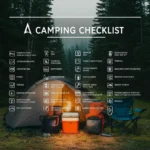
- Digital: Use our Camping Checklist App to sync across devices, save progress, and filter by trip type.
- Printable: Download our PDF checklist and check it off with a pen.
- Customizable: Tailor the list to your specific trip. Add “fishing gear” for a lake trip, or “snowshoes” for a winter trip.
How to Use the Checklist:
- Start Early: Begin checking off items a few days before the trip.
- Categorize: Group items by category (Shelter, Cooking, Safety).
- Final Check: Do a “driveway check” on the morning of departure.
❓ Frequently Asked Questions
What do you need to pack for a camping trip?
You need the 10 essentials: shelter, sleep system, lighting, navigation, first aid, hydration, clothing, hygiene, tools, and food storage. Beyond that, it depends on your trip length and location.
What are the 10 most essential camping items?
- Tent
- Sleeping bag
- Sleeping pad
- Headlamp
- Stove + fuel
- Lighter/matches
- Water + filter
- Cooler + ice
- First aid kit
- Trash bags
What do most people forget to pack for camping?
Trash bags, tent stakes, dish towels, biodegradable soap, toilet paper, and bug repellent.
What food and cooking gear should I bring camping?
Bring easy-to-cok meals like pasta, rice, canned beans, and pre-made sandwiches. For gear, a two-burner stove, cast iron skillet, and coolers are essential.
How do you pack differently for tent camping vs car camping?
Tent camping requires lightweight, compact gear. Car camping allows for bulky, comfortable items like air mattresses and large coolers.
What should you pack for camping with kids?
Extra snacks, glow sticks, comfort items, rain gear, and quiet activities for bad weather.
How much does it cost to get started with camping gear?
You can start with $40–$60 for budget-friendly gear, or $50+ for high-end equipment. Renting is a great option for first-timers.
What is the 3-3-3 rule of camping?
Drive no more than 30 miles on arrival day, arrive by 3:0 PM, and stay at least 3 nights.
What is the golden rule of camping?
Leave it better than you found it. Pack out all trash and respect the environment.
What are the 5 C’s of camping?
Cuting tool, Combustion, Cover, Container, and Cordage. These are the core survival elements.
What is the 20-foot rule?
Camp, wash dishes, and bury waste at least 20 feet from water sources to protect water quality.
Is there a checklist just for tent camping or car camping?
Yes! Our app allows you to filter checklists by tent camping, car camping, or backpacking.
I’ve never camped before. Where do I start?
Start with a car camping trip at a developed campground. Use a checklist, bring easy meals, and focus on comfort.
🗺️ Plan Your Next Trip: Find a Campground
Ready to hit the road? Use our Camping Preparation Guide to find the perfect spot. Whether you’re looking for a state park, a national forest, or a private campground, we’ve got you covered.
🎁 Want a Personalized Version of This Guide?
Don’t want to memorize this list? Download our customizable checklist app and create your own perfect packing list for every trip. Get the App today!